
In my second workshop with members at Leep1 we incorporated arts-based methods as a means of sharing and representing understandings and experiences of hate crime. I asked members to create ‘mood boards’ and we reflected upon these together throughout the workshop. In this post, I’d like to share some preliminary reflections, drawing upon the conversations we had, and the mood boards produced.
Thank you to all members who were involved in this workshop, including: Arjun, Samir, Caitlin, Terry, Sabrina, Michael and Jenny.
Understandings of hate
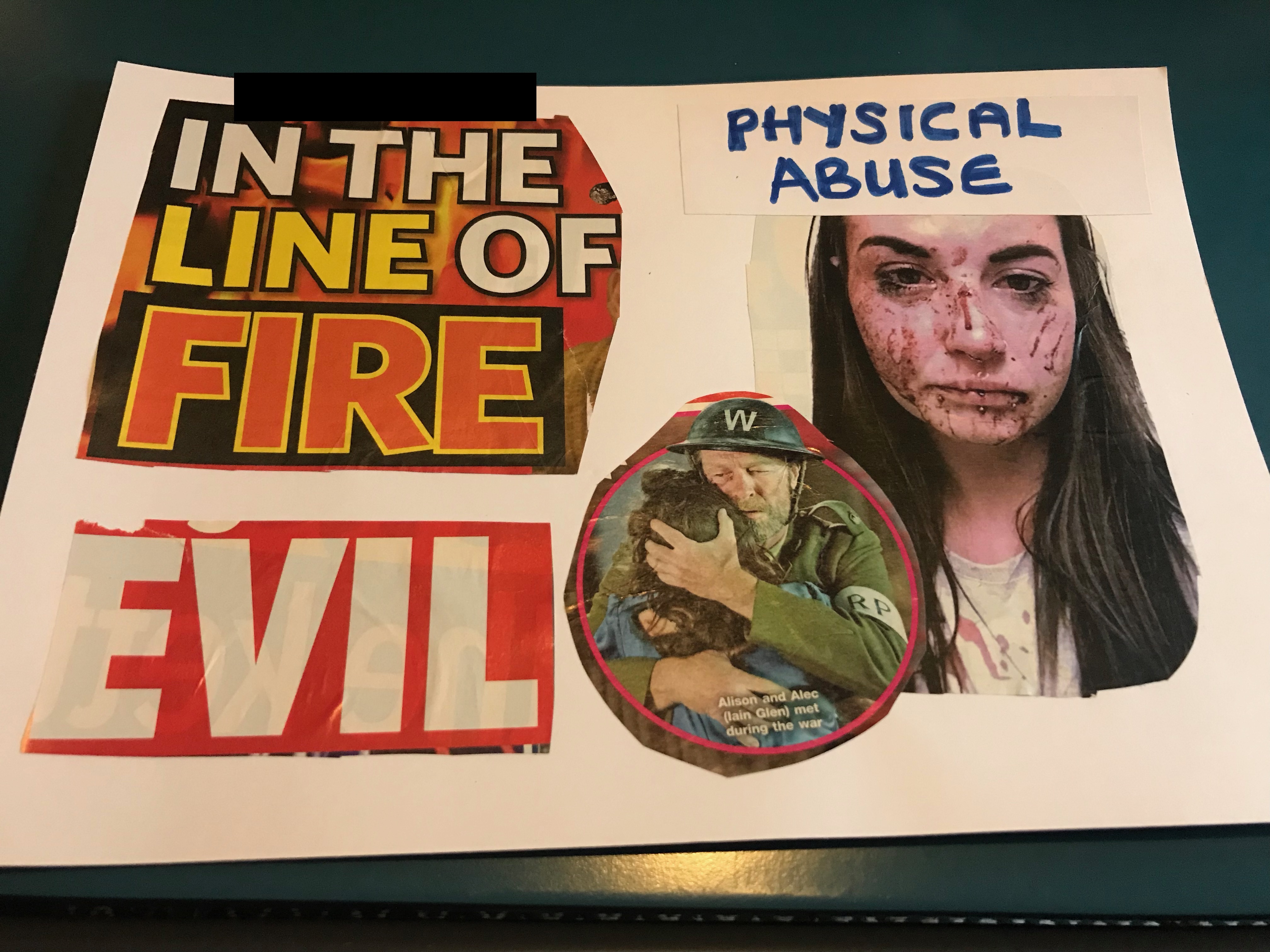
Following on from our previous workshop, members continued to describe hate crime as ‘bullying’ and many chose to present this through images of physical violence (See Terry’s mood board below).
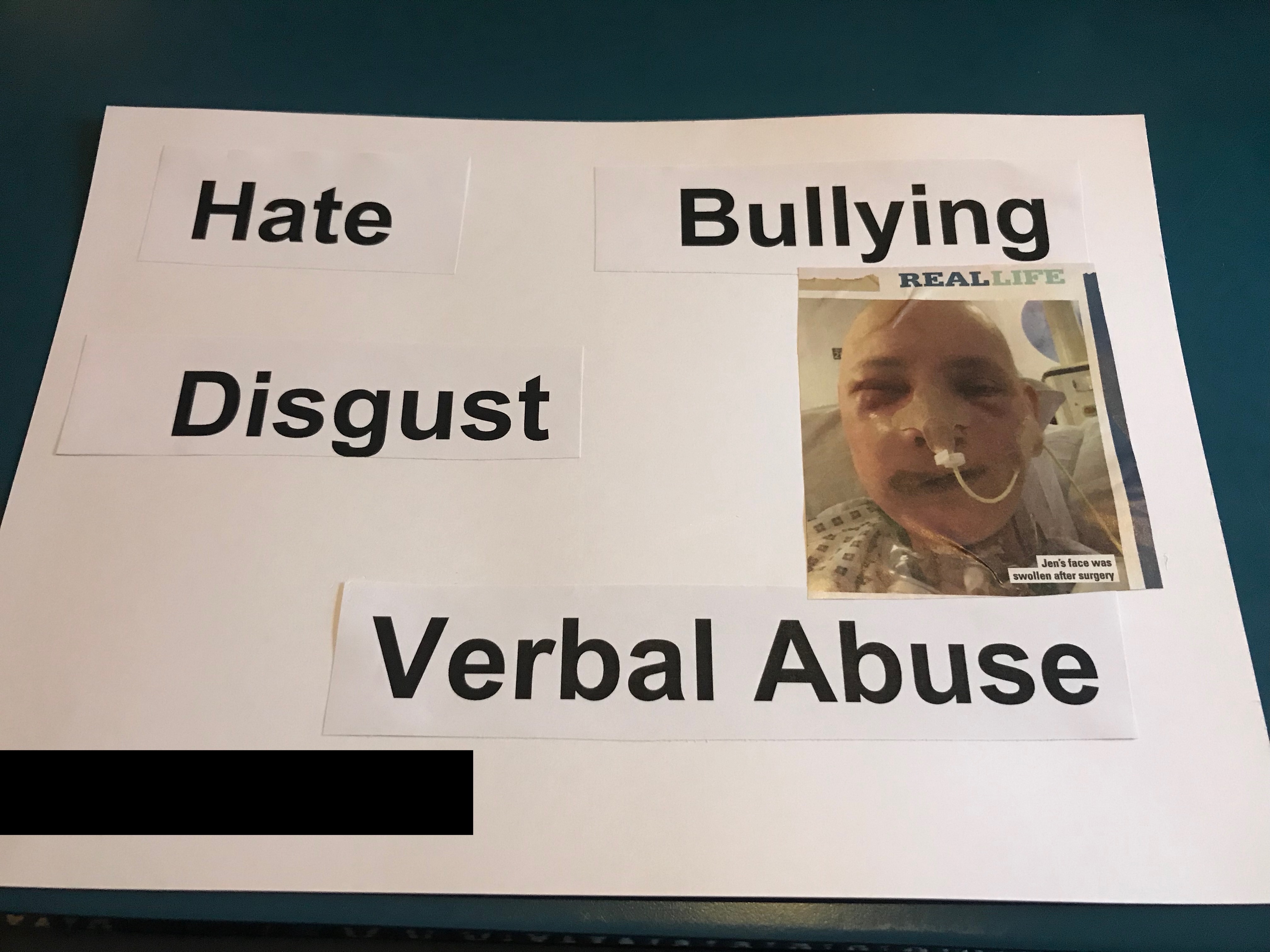
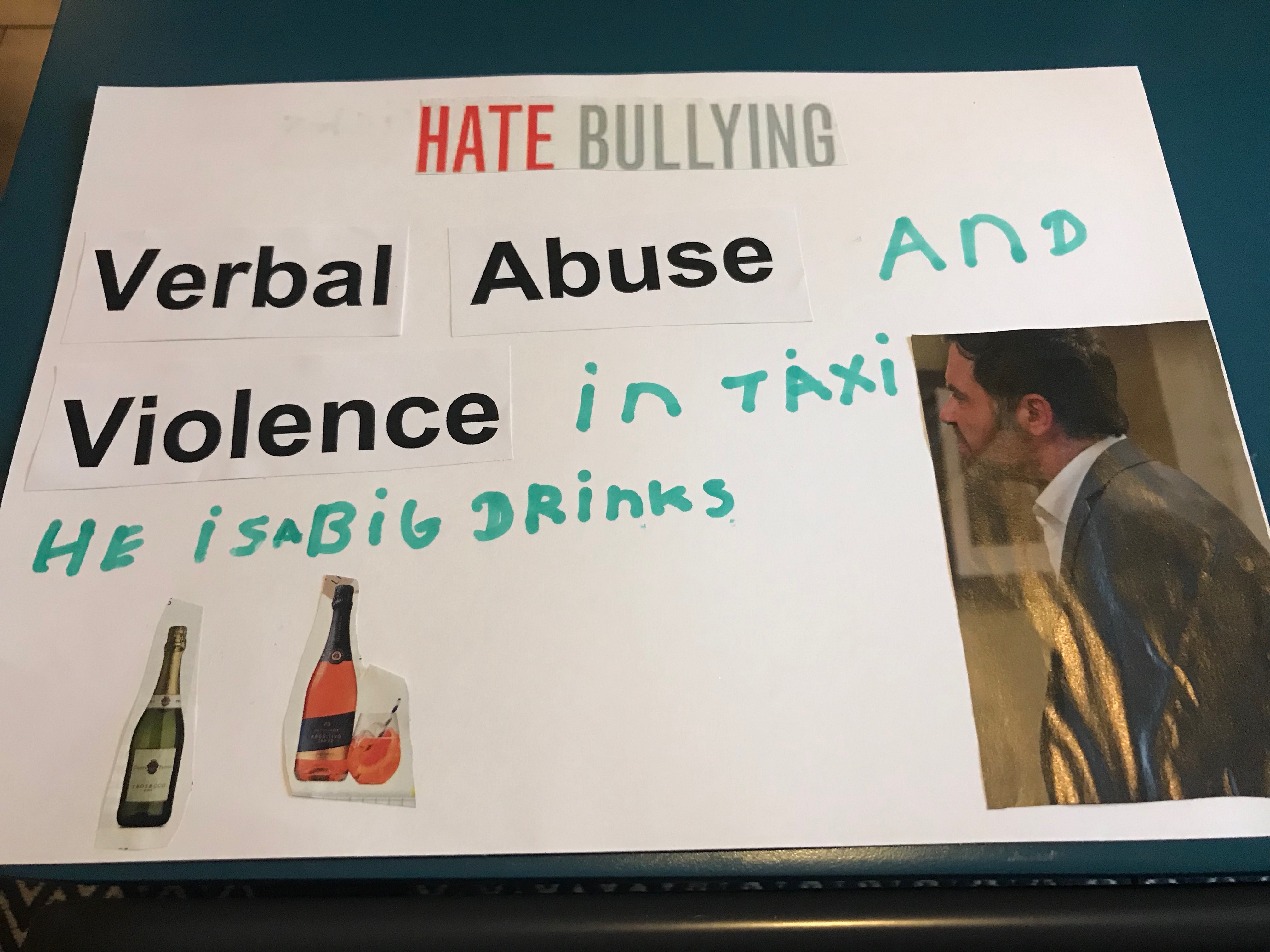
Hate crime was also understood to include sexual abuse (Sabrina), verbal abuse (Michael), death threats (Caitlin) and violence (Michael).
The values and risks of media
Some of the magazines that I had provided as possible resources for images and words for TV Guides. For Michael, these cultural artefacts provided a means of thinking about his own understanding of violence, and the different forms this could take. Specifically, he drew upon storylines in Coronation Street and Emmerdale, as they were presented in the TV Guides. He explained that Graham, from Emmerdale was a bully, while Sally from Coronation Street was being bullied, explaining ‘Sally is being bullied, she’s not guilty because she did not do the deed’ (See Michael’s mood board below).
Sabrina also discussed soap storylines, and referred to Hollyoaks which had recently aired a story around the issue of sexual assault. This was a particularly important story for her.
This presented a whole new means of understanding hate crime that I had not considered before these workshops. While I imagined the magazines would provide useful images and words when making the mood boards, I had not realised the educational potential that could be gained by reflecting upon TV storylines.
The educational potential of TV representation is twofold. While it can present the contextual basis to educating about real-life issues, it equally shapes our understandings and assumptions of real people. Members were critical of media representations. For example, Sabrina explained that programmes like Channel 4’s ‘The Undateables’ made her angry because it reinforced for others, that disabled people are not ‘normal people.’ Michael explained that this show resulted in an increase in prejudice towards disabled people.
Feelings associated with hate crime
Like our previous workshop, members still found it difficult to describe exactly what they thought hate crime was. However, they found it much easier to present the feelings and harms that they associated with it. Arjun looked for photos of people looking upset, and described that it made people ‘not feel good’ (See Arjun’s mood board below).
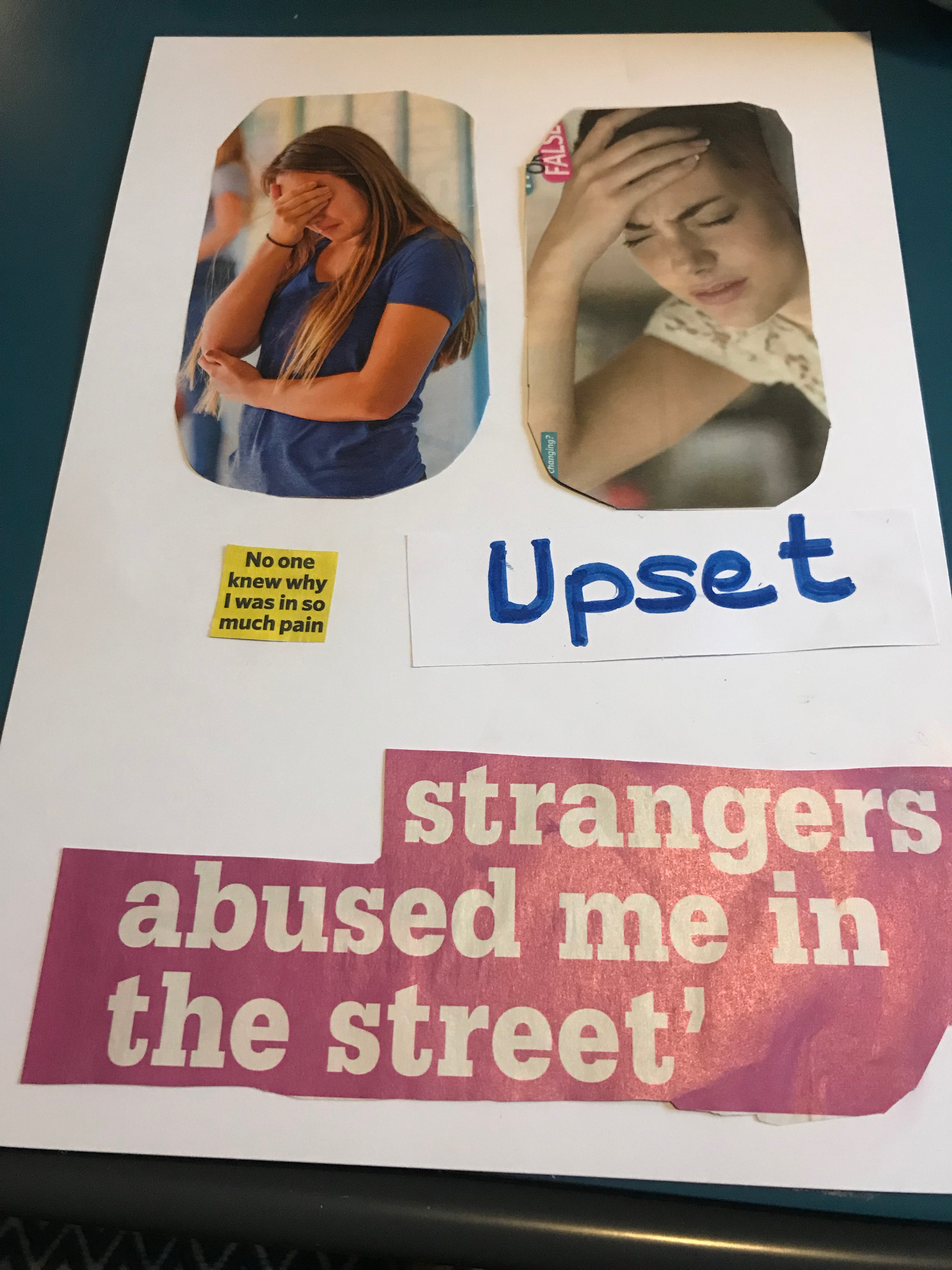
Caitlin explained that hate crime and sexual abuse had made her ‘freeze’ and Samir said that he would feel ‘very scared’ if he was to be a victim of hate crime.
Members also spoke about the long-lasting harms that were felt after experiencing hate crime. Upon reflecting upon her own experiences of sexual abuse, Sabrina said ‘it’s messing with my head again, I don’t know why’ and asking if it was because of ‘anger.’
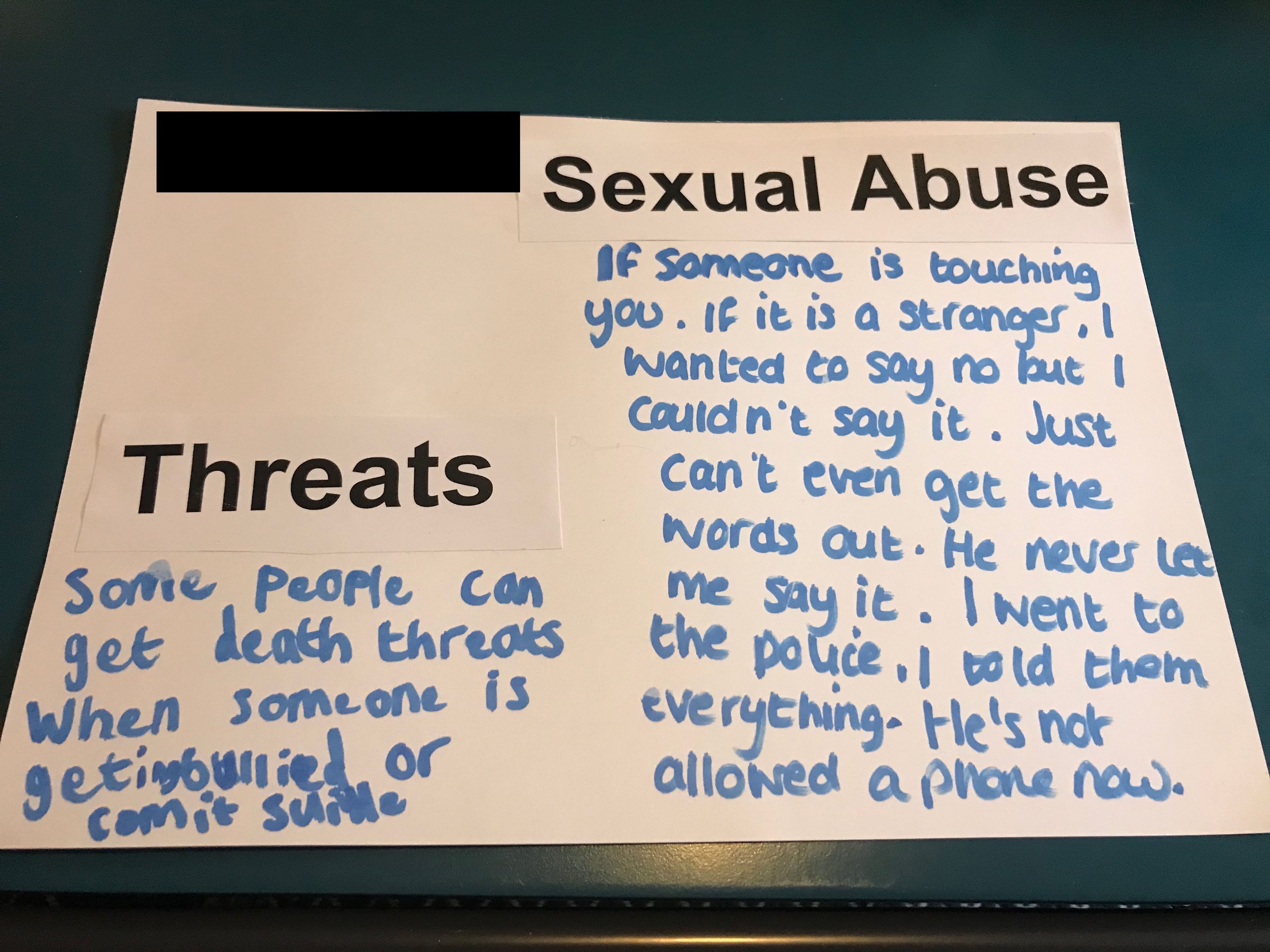
Caitlin found it difficult to present these harms on her mood board, but was really keen to still share her experiences with others. Rather than use images, she chose instead to write about her experience, which was about sexual abuse (See Caitlin’s mood board to the right).
Challenging hate crime
Members at Leep1 are actively involved with a number of projects and activities which aim to raise awareness of a variety of disability related issues. Many of the members are involved in drama performances within schools in order to teach young people about disability hate crime. In my previous blog post, I wrote about Sabrina’s reflections on the importance of these kinds of projects.
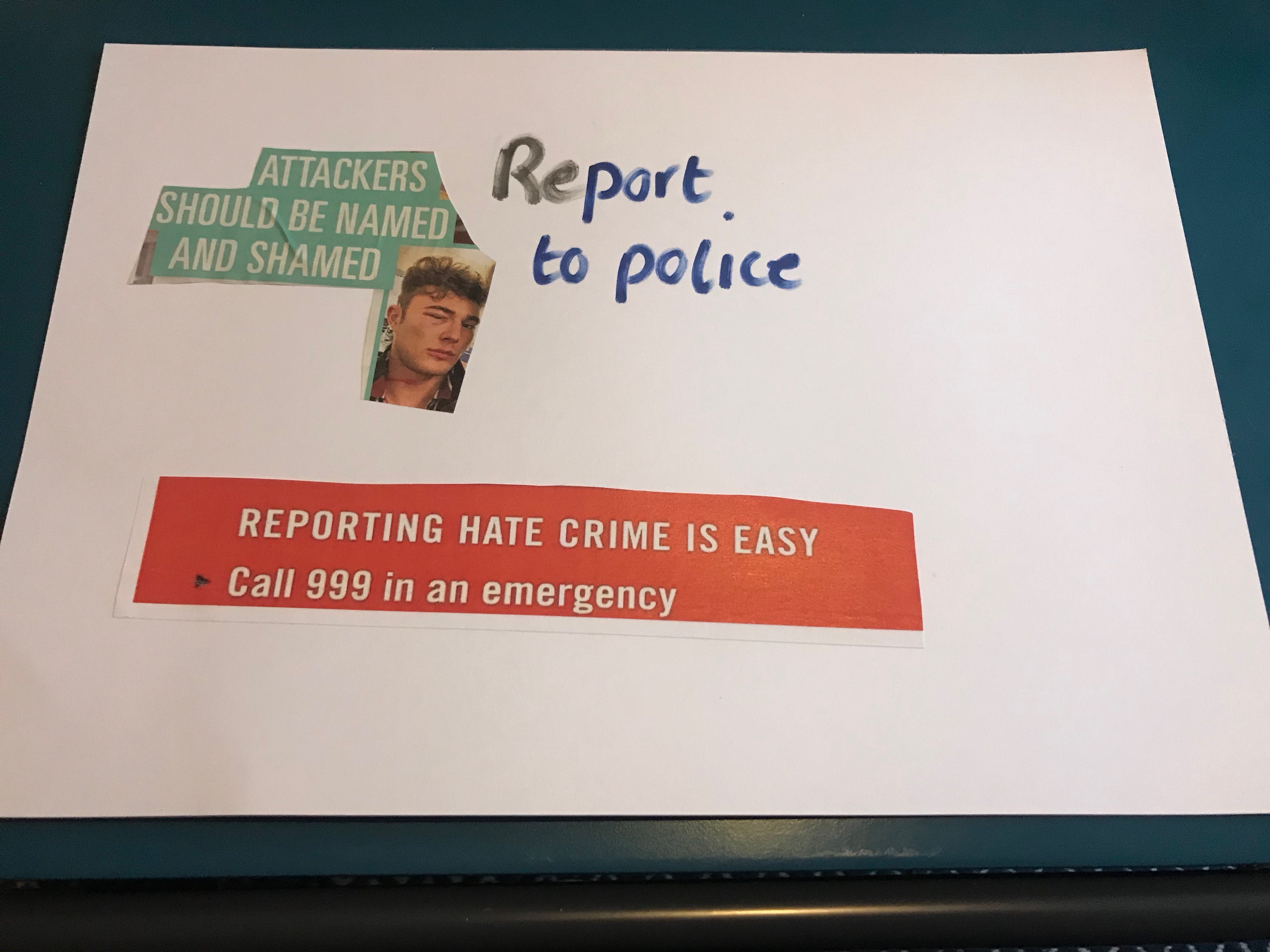
In addition to this, there were more implicit approaches to challenging hate crime that members presented. Jenny chose to focus on the importance of reporting hate crime, and educating others about how easy this could be. For her, reporting was important to ensure that people who committed hate crimes faced the appropriate consequences, and being ‘named and shamed’ (See Jenny’s mood board below)
Members also spoke about the value of ‘speaking out’ (Sabrina) and sharing experiences with others.
This built from our previous discussion, where members described the emotional harms of not being able to talk about our experiences. Samir presented the comfort that could be felt when disclosing our experiences and feelings to those close to us (See Samir’s mood board to the right).
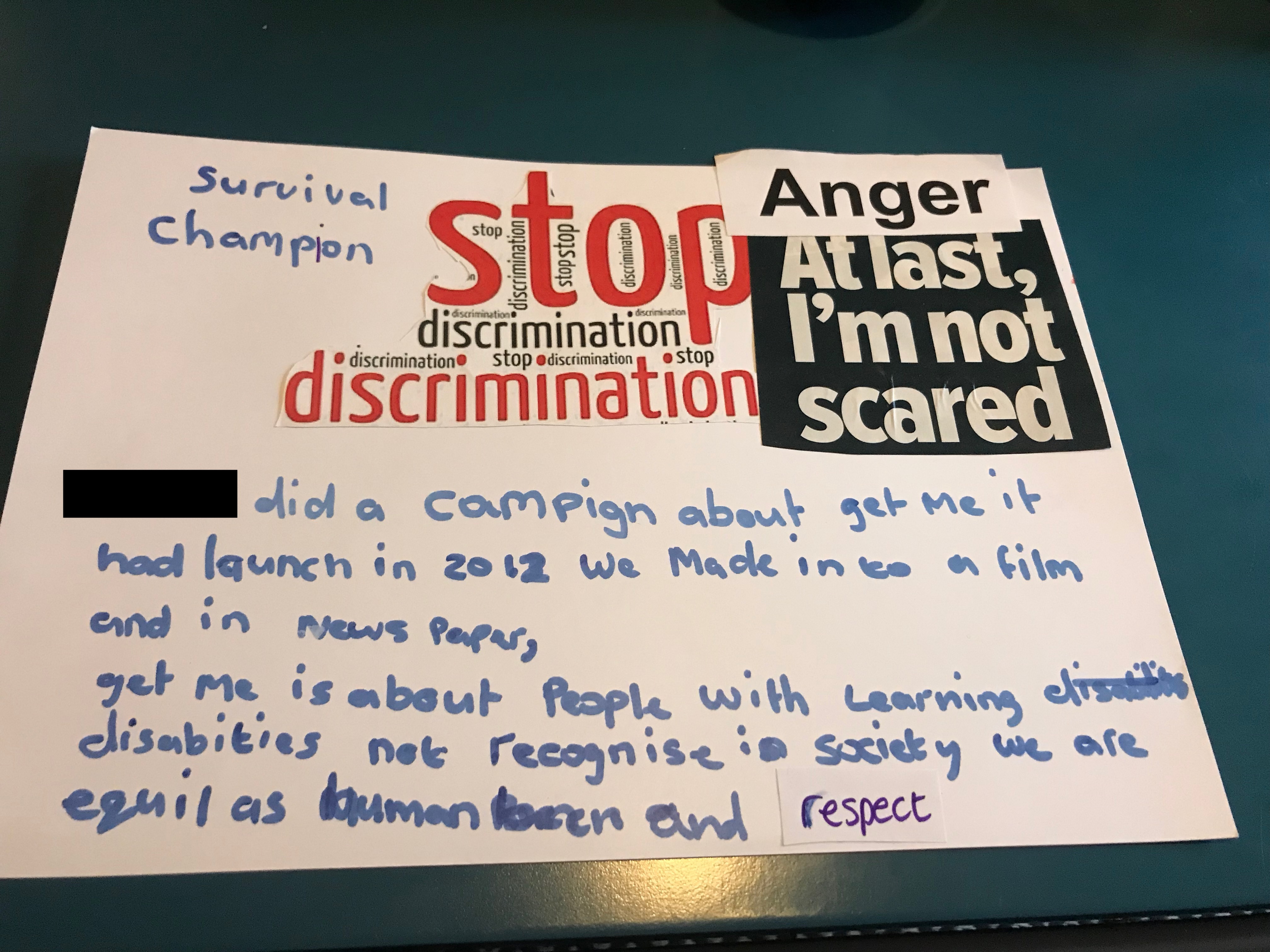
When discussing the importance of speaking out against hate crime, Sabrina spoke about her own use of using the media in order to raise awareness about disability-related topics. She explained with pride about a campaign she had been involved with called ‘Get Me’ which aimed to teach others about disability, and to recognise disabled people as equal human beings in society. For Sabrina, her engagement with these projects represented her ‘survival’ (See Sabrina’s mood board below).
Reflections
Using arts-based methods opened up the opportunity to reflect upon the meaning of hate crime together. Images and words enabled members to produce meaningful representations of what hate crime meant to them, and to discuss any experiences that they wanted to share. We were able to collaboratively construct our understandings of hate crime as members created their mood boards, and explained why they were choosing to present certain images or messages.

 Experiences of Everyday Hate: A PhD Project