
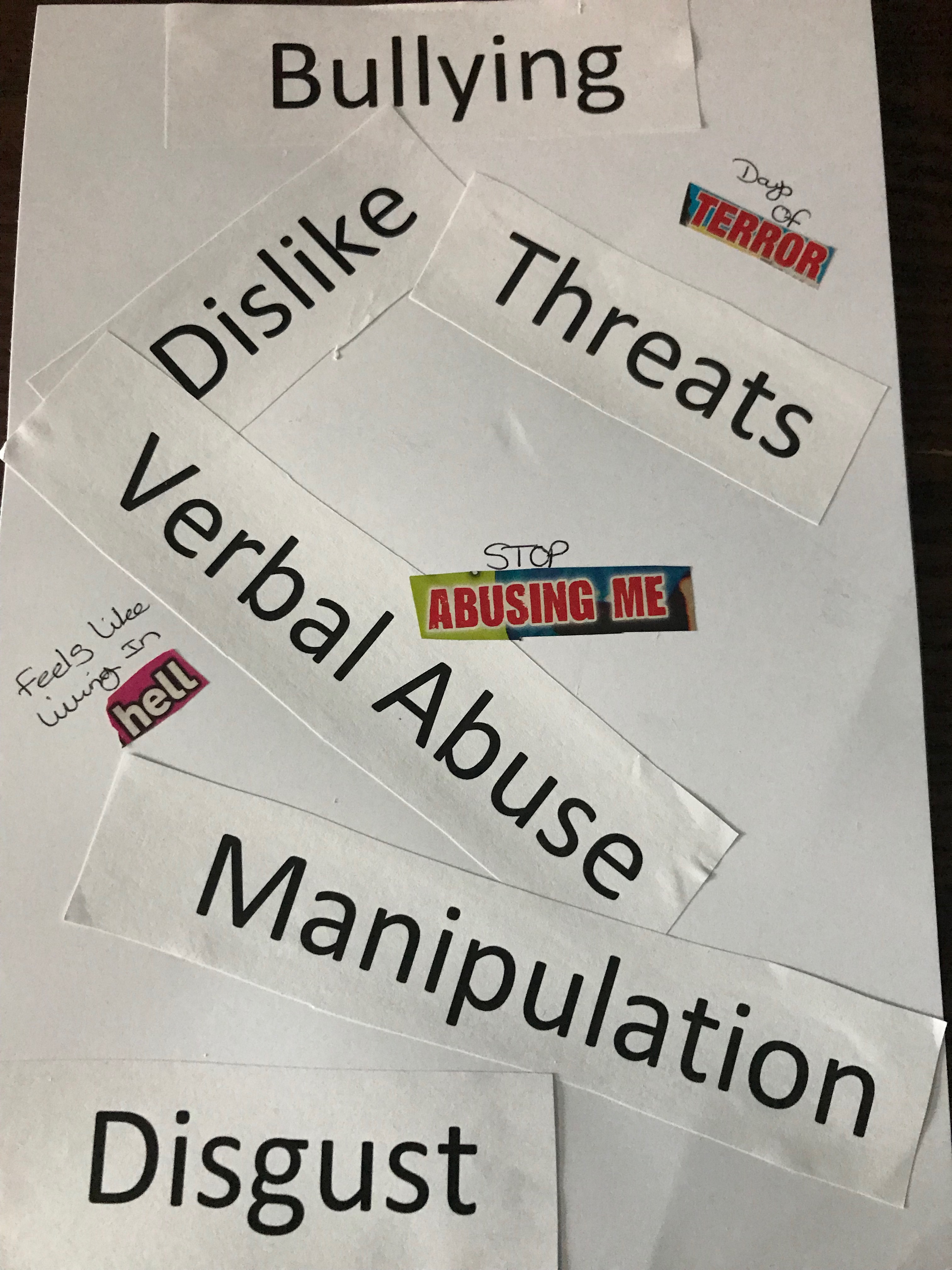
In this workshop, I asked members of Resolve to create mood boards about their understandings and experiences of hate crime. Huge thanks to all involved, and for their continued support: Elvis, Mary, Amanda Depp, Sinead, John Dovet, Mr Positive, Fifi, Bev, and Joyce.
What is hate crime?
As participants started to look at the resources and think about their mood boards, we shared our understandings of what hate crime is. For most participants, the easiest way to describe hate crime was to reflect upon their experiences of bullying during school. Mary in particular spoke about being picked on and physically abused by another student. In addition, Sinead and John Dovet said that other students would often avoid them during school, because they were seen to be a ‘threat.’
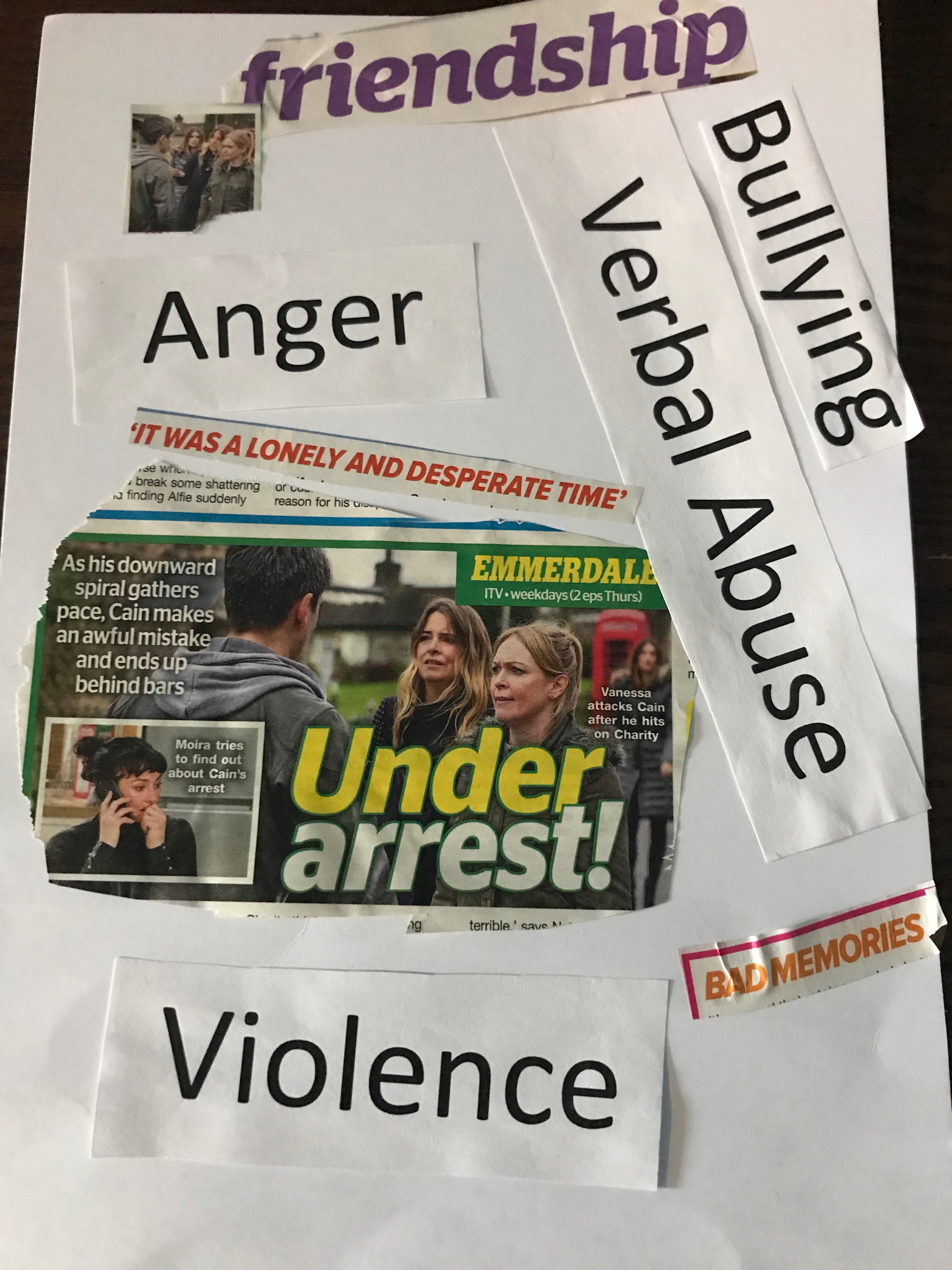
Fifi also reflected upon her time at school. For her, bullying was the ‘norm.’ She spoke about school friends ‘pulling you to pieces’ and making fun of her because she was ‘taller than anybody in the school.’ She explained that this had made her feel very vulnerable, and had impacted the way she thought about herself, and what she could achieve.
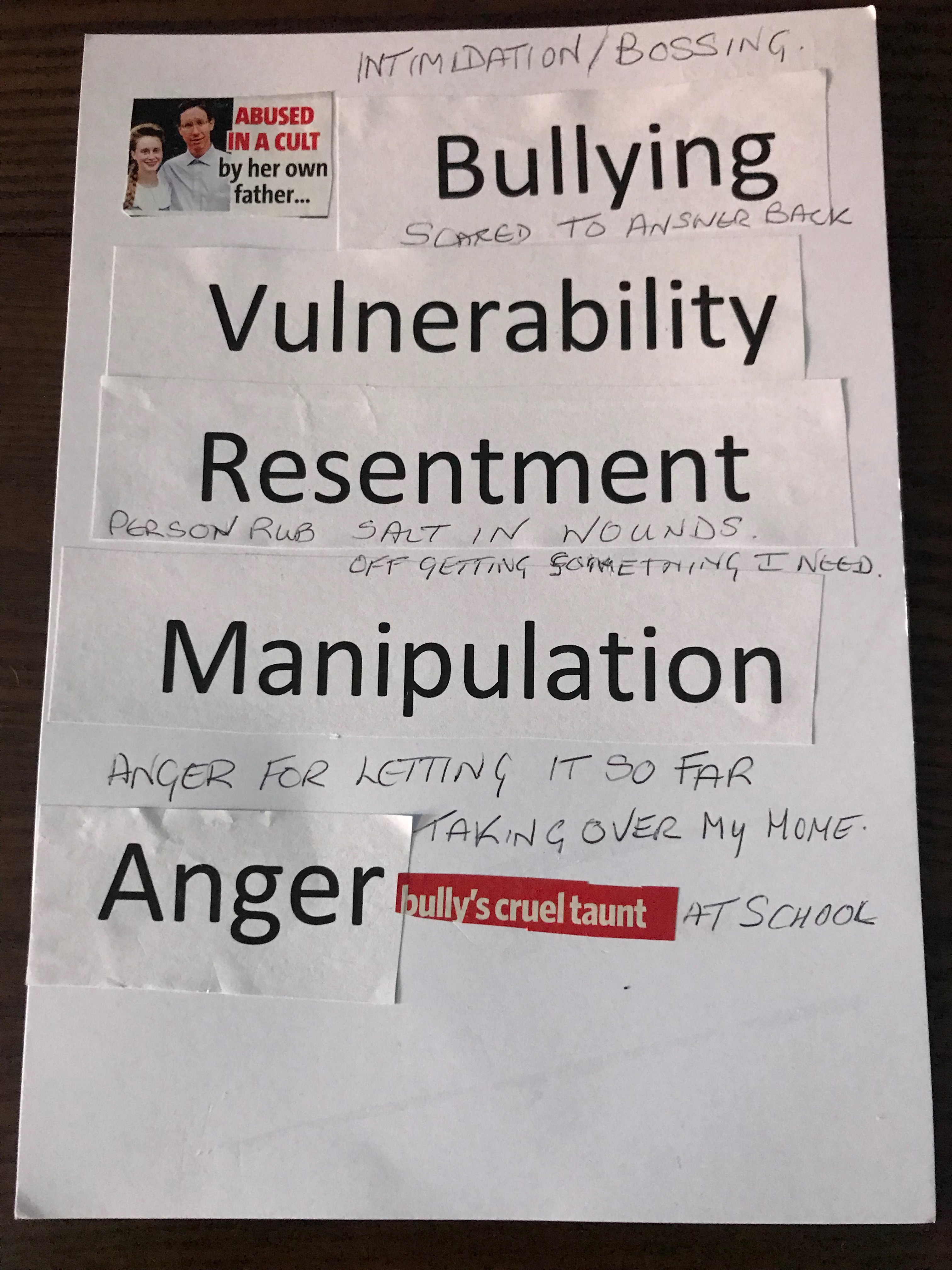
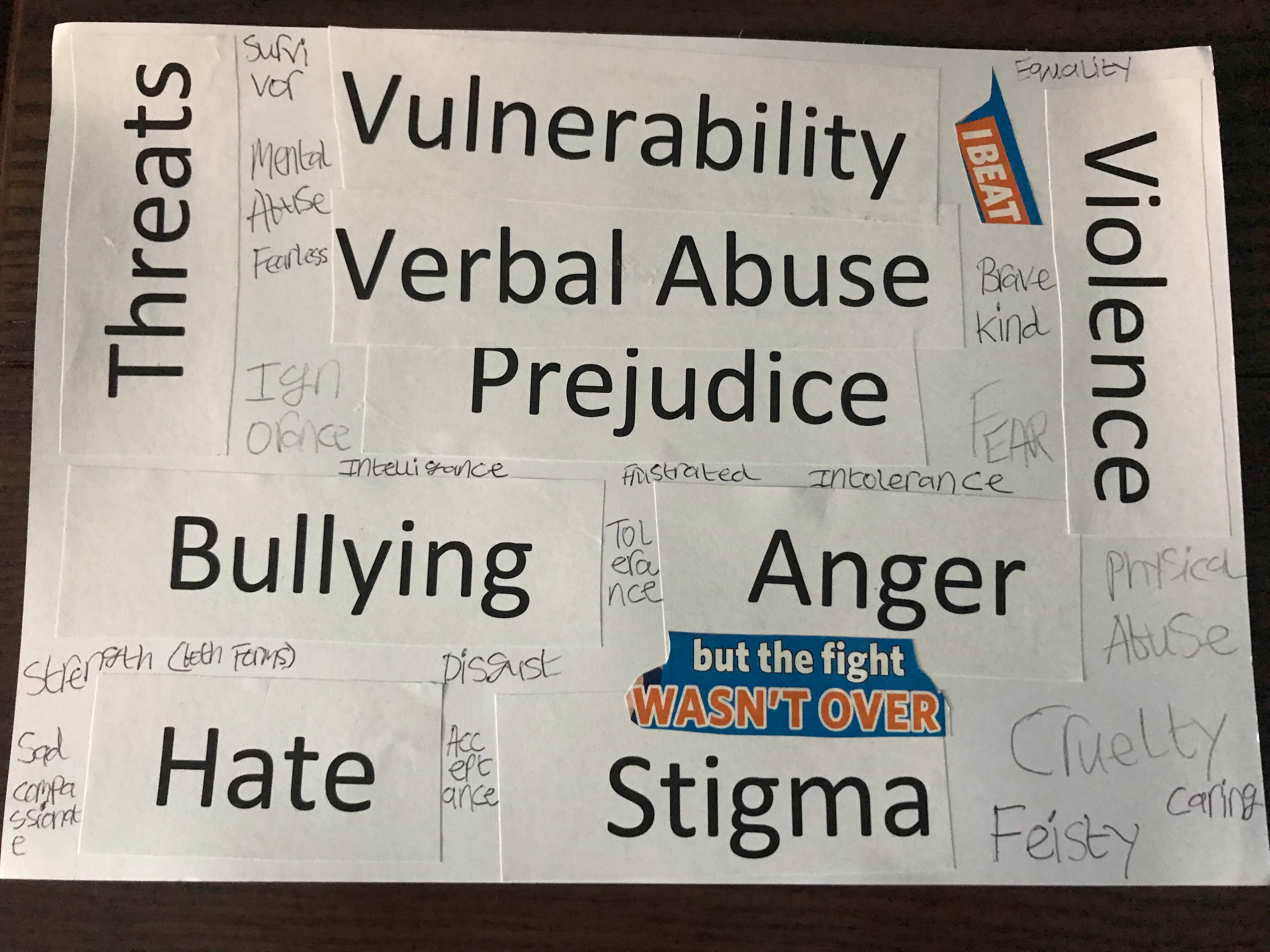
Similarly Sinead discussed ‘mental abuse’ which she understood as continuously putting people down. For her, ‘when they keep telling me you’re not good enough it knocks your confidence.’
Fifi and Joyce reflected on their past relationships which they described as abusive. In addition to physically beating her, Joyce spoke about the level of control her former partner had enforced upon her. She said, ‘I had a boyfriend and he was bossy. He liked telling me what to wear and what to do.’ Similarly, Fifi said that her ex husband often intimidated her. Elvis and Amanda Depp also spoke about the risk of manipulation, where people would try to take over their lives. When thinking about hate crime then, it calls for more attention to the more intricate and private relationships that people have with others, not simply those that are enacted in public places.
What does hate crime do?
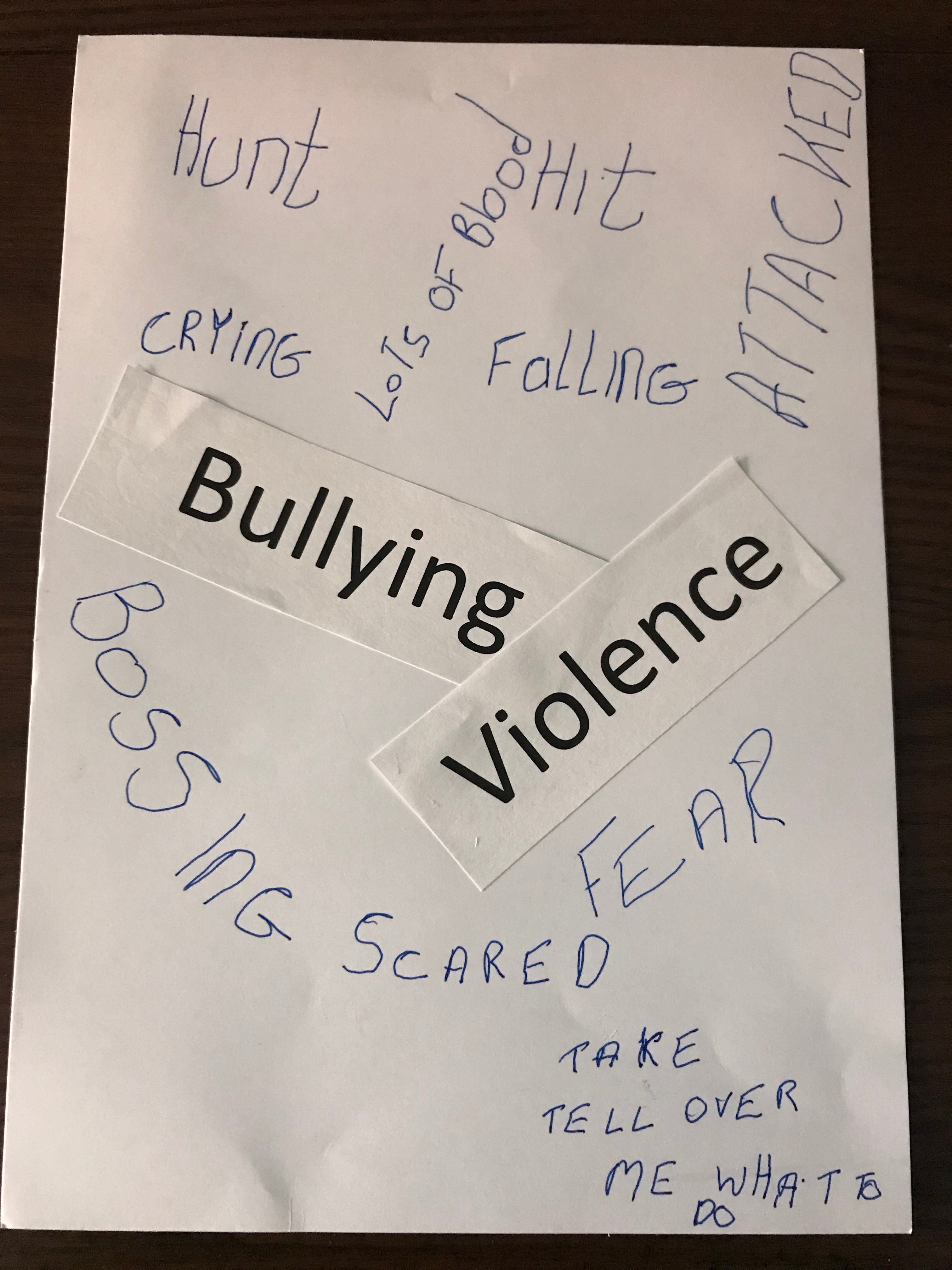
When participants spoke about their experiences of hate crime, their reflections didn’t simply describe events, but shared a range of meanings attached to these events. More specifically, participants reflected upon how these experiences had, and continued to, make them feel.
Being bullied at work by her boss had made Amanda Depp feel frightened to go into work. The additional workload she was being forced to do had made her so exhausted that she fainted at work. While this was a long time ago, she admitted that she had never been able to get closure from the experience, having not being able to confront her boss.
Drawing a photo of Judy Finnigan at the centre of his mood board, Elvis was able to speak about his own mental health issues, by relating it to the magazine story on Judy Finnigan. He reflected upon being nervous, losing weight, and being stressed and depressed. He explained:
‘it can effect you growing up and your brain, your mind, because, when you get bullied, it’s going in your mind all the time… you can’t forget what’s happened’ (Elvis)
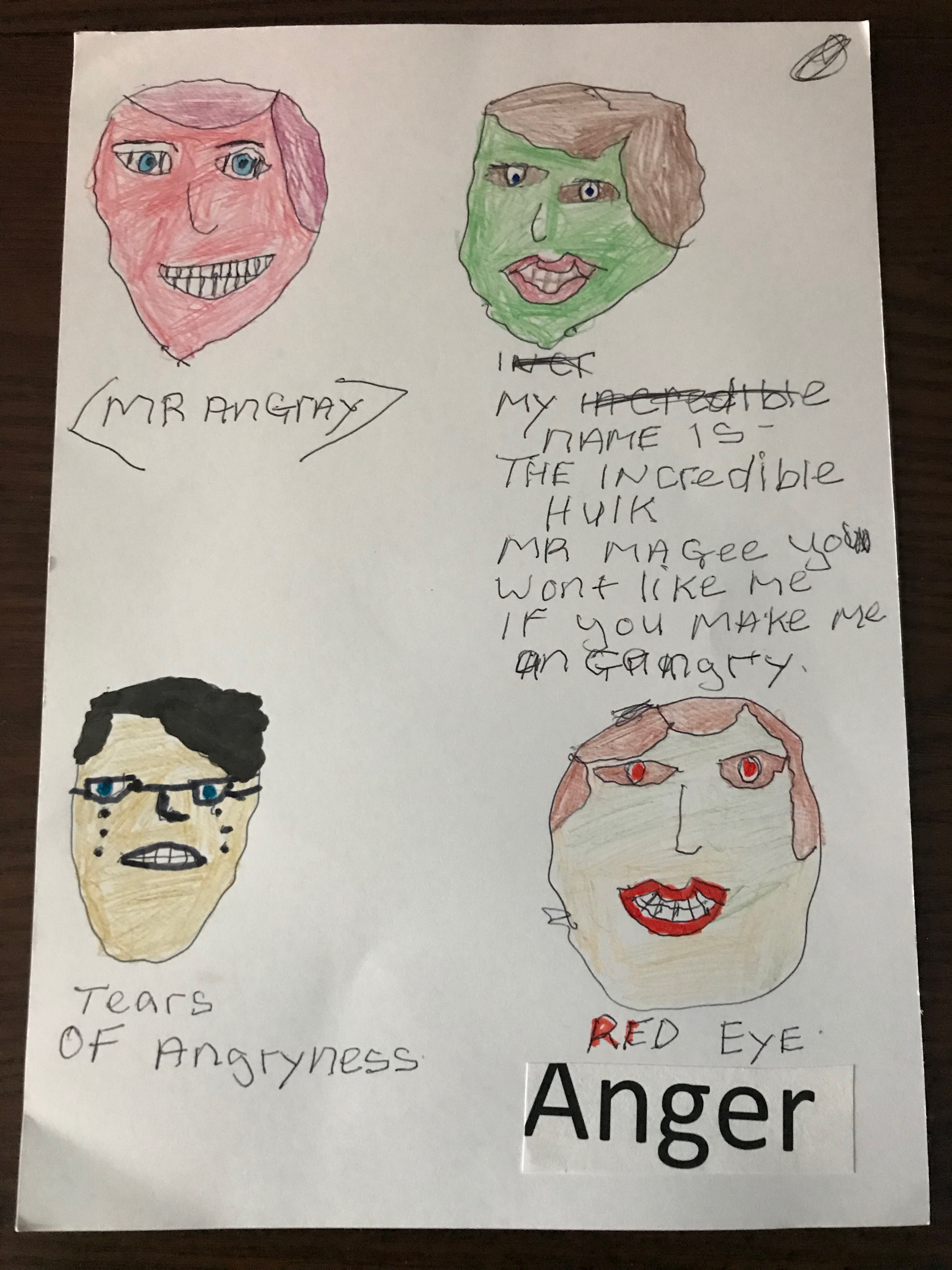
Participants also expressed anger when reflecting upon their experiences. Fifi spoke about the feeling of resentment, and Mary wanted to portray the bitterness she felt towards those who had bullied her during school. Similarly, Sinead said she she felt more frustration than sadness about her experiences. In his mood board, Elvis drew ‘tears of angerness.’
Negotiating hate crime
Sinead and John Dovet were keen to use the mood boards to express what they thought hate crime was, but to also show how they and others could challenge it. John Dovet suggested that ‘if you put a little but if compassion it helps.’ Sinead spoke about the importance of survival because ‘we didn’t give up despite the fact we were abused.’ On the contrary to giving up, Sinead expressed a significant amount of frustration and anger towards hate crime, and she spoke at length about her desire to challenge those who do not accept her for who she is. While she recognised that ‘they can easily beat me because i’m a girl and disabled’ she also said that his had made her tougher.
For members at Resolve, supporting one another was key for being able to prevent and challenge experiences of hate crime. They spoke about any potential risk they had witnessed in the town centre, and offered each other advice about keeping safe in the community. This demonstrates the value of the collective support that is already enabled through the attendance of organisations such as Resolve, and suggests the need to further harness this for others not currently accessing such services.
For Fifi, separating from her ex-husband had enabled her to focus on herself. She explained:
‘I’ve got everything I need now and as I said before, it was like an open wound and he was, he was being nasty and one thing and another, and I daren’t say boo to a goose. But now i’m getting there, I feel a lot happier, I feel like i’m getting me back now.I know it’s taken years but by crickey it’s hard work, i’m nearly at the top’
Why does hate crime happen?
When beginning to make her mood board, Sinead thought about her own experiences, and some of the reasons she thought she might have been targeted by bullying. She explained, ‘I was born disabled so yeah I think they hated the fact that I was different.’
Participants also spoke about why they in particular might have been targeted by hate crime. John Dovet explained ‘they think they can get away with it because the way they see it, i’m just a pushover.’ Similarly, Amanda Depp explained that she was bullied in work because ‘i’m vulnerable and I wouldn’t argue back.’ She described being bullied by her boss at work, who was also a family friend which made it more difficult for her fight back.
Ideas around vulnerability as an underlying motif of hate crime was returned to throughout the workshop. Developing this further, Bev suggested that older people are more likely to be targeted, as ‘they can’t help themselves.’ However, when referring to bullying at school, participants thought that those who were younger were more vulnerable. Elvis explained ‘as you get older they don’t bully you as much because they go onto another person who’s more vulnerable than you.’
The significance of vulnerability for understanding hate crime is an important consideration given the difficulties that this concept has created in recognising the hostility inherent in such crimes against disabled people.


