
While participants agreed that hate crime can happen anywhere, some places were suggested to be particularly risky. This included schools, our homes, social spaces (like clubs and pubs) and public transport.
School

Many participants spoke about their experiences of being bullied whilst at school because they were seen to look or behave differently. For example, Elvis described being called ‘goofy’ and Delboy reflected upon being called ‘speccy.’ Francis Emerson recalled being called many names, including ‘pineapple head’ and ‘king kong’ and Mr Twilight had been called ‘gayboy.’
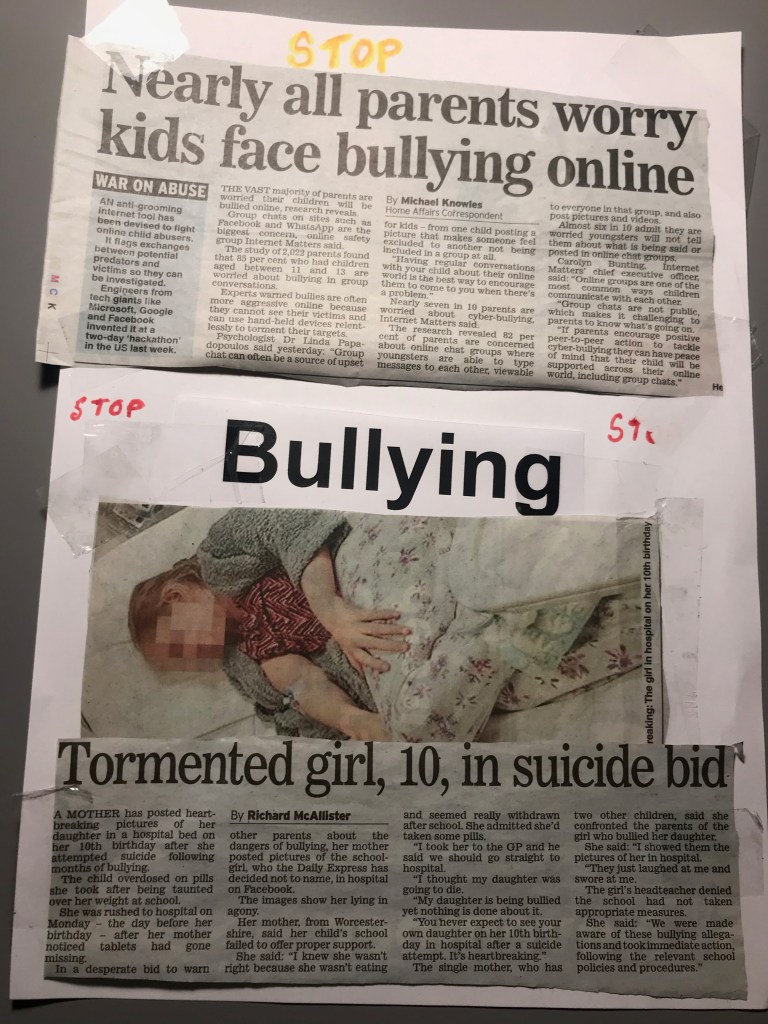
Bob and Ellie also believed that bullying is likely to have gotten worse for children and young adults due to the increased use of the internet. As Bob presented in his mood-board, there is growing worry about children and young people experiencing bullying online, and not having an escape from this.
Bob: The top of the page says ‘stop’ with a newspaper clipping below with the heading ‘nearly all parents worry kids face bullying online.’ Below are the words ‘stop bullying stop’ and a newspaper clipping of a photo of a young girl lying in a hospital bed wrapped in a duvet cover and the heading ‘tormented girl, 10, in suicide bid.’

Some participants recalled their experiences of attending institutional schools both as children and adults. In these spaces, Michael P argued that there were unequal power relations between staff and students, and that students were regularly subject to different forms of physical, emotional, and sexual abuse. According to Robbie, this was allowed to happen due to the lack of protection from outside services. Indeed, Michael P referred to them as being ‘hidden from the outside world.’
Neighbourhood
Others spoke about their experiences of hate within their local neighbourhood.

For example, Robbie described being robbed and physically assaulted outside of his shared living accommodation, and both Fifi and Joyce had experienced abuse within their homes at the hands of their partners. Doria Skadinski’s home had become the target of violence by a group of local teenagers, who had vandalised her home on a number of occasions and shouted verbal abuse at her and her son. Finally, Kezza was intimidated by her neighbours due to her sexual orientation. She recalled being called names, her neighbours waiting for her to come home in their window, watching her in her garden and taking her underwear off the washing line.

For many people, our home is a place to feel safe and comfortable. But, for participants who had experienced hate within their homes, the home became another site of hate and violence. As a result, many participants expressed ongoing feelings of fear, discomfort and the desire to hide away from others.
Public spaces

For some participants, their presence within public space had attracted hate and unwanted attention from others. For example, Shaz described having his sight impeded by a group of teenagers who had noticed him using a white cane, and Lynn recalled having mud thrown at her and being spat at as she moved through the street in her wheelchair. These incidents can make people feel out of place and that they do not belong in public spaces.

For others, verbal abuse in the street was common place, but in particular when using forms of public transport.

Accessible spaces on public transport were particularly risky, and many participants expressed their fear of having to justify their use of these spaces. Indeed, many participants felt a high level of suspicion towards them. For example, due to being young, Francis Emerson admitted that he rarely used the accessible seating due to the nasty comments made by others if someone older came onto the bus. Shaz and Lynn had also been called ‘scroungers’ and ‘benefit cheats’ when occupying accessible spaces.
These experiences show how disabled people can be read as both undeserving and unauthentic just by being present in certain spaces.

Being subject to questioning was a common experience described by many participants when occupying public space. In particular, some participants recalled being made to feel out of place or awkward when occupying social spaces. For example, Doria Skadinski reflected upon being laughed at by a group of men as she approached the toilet facilities. Francis Emerson also explained the difficulty of using public toilets due to the fear of being ‘questioned’ about his gender by others.
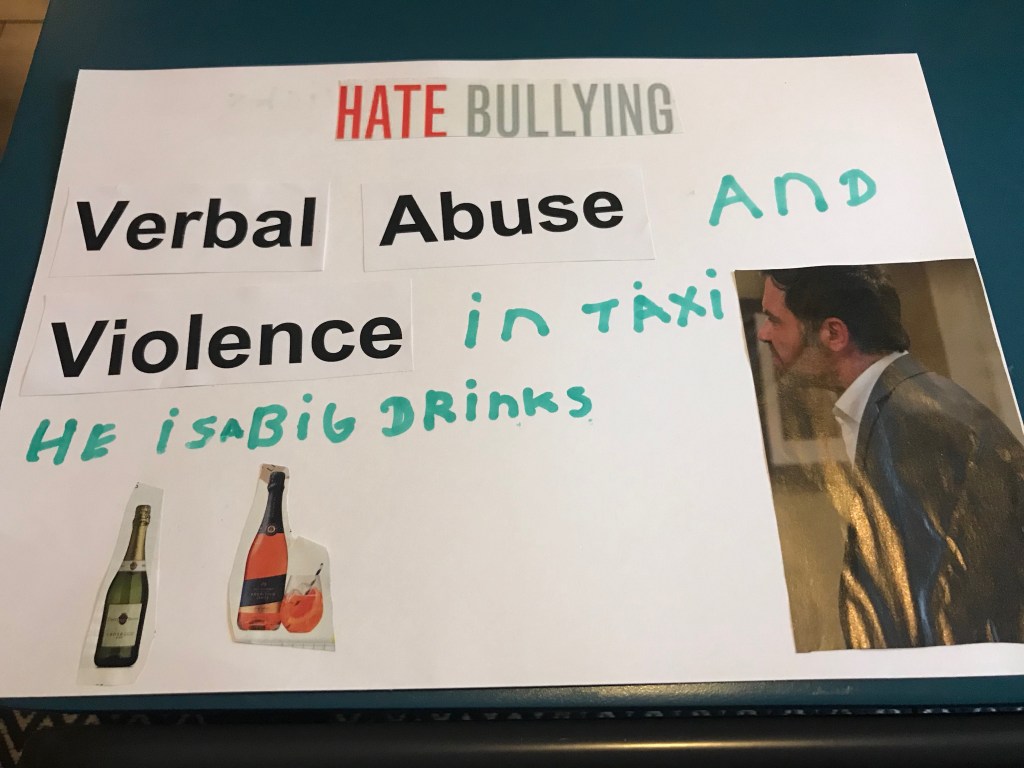
The role of alcohol was also a concern for many people, who commented upon the increase risk of violence (Amanda Depp; Michael) towards them where alcohol was involved. This included pubs and clubs, or being in town during the evenings.
This fear was expressed in particular by members of People in Action, who believed that young LGBTQ+ disabled people could be taken advantage of. According to Harry, alcohol could also make people behave in rude ways towards disabled people, and ask very personal questions.
Michael: The top of this board reads ‘hate bullying.’ Below are the words ‘verbal abuse and violence in taxi he is a big drinks.’ Next to this is a photo of a character from the TV soap operate, Coronation Street. At the bottom are two photos of bottles of alcohol.
AND SO:
Hate crime can happen in many places – both in public and in our homes. Problematic spaces described by participants included schools, pubs and clubs, our homes, and public transport. These experiences change how safe people feel which can stop disabled people from using them.

